
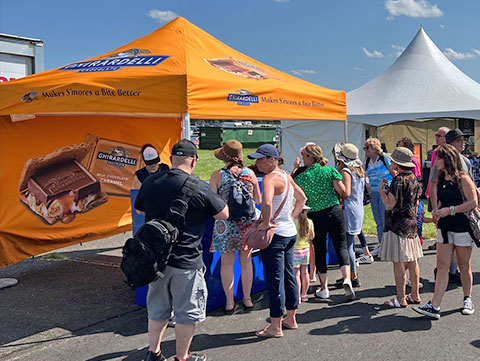
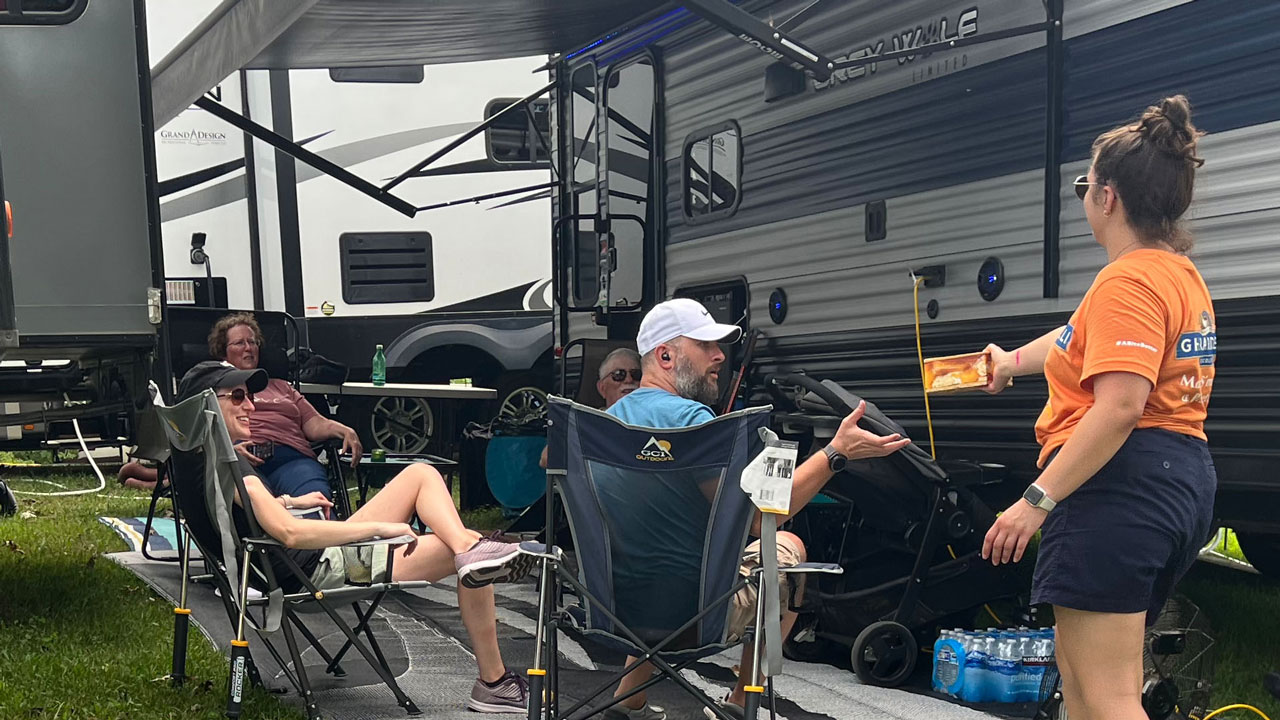
Chocolate at a baseball game. Insurance at a college basketball tournament. Frozen dog treats at a tailgate. Some of the most successful sports sponsorships we've executed have been for brands that seemingly have nothing to do with sports.
Welcome to the world of non-endemic sponsorship—and it's where some of the smartest brand marketing is happening right now.
What "Non-Endemic" Actually Means
In sponsorship language, "endemic" brands are those with a natural connection to the sport or event. A beer company sponsoring a football league? Endemic. An athletic apparel brand partnering with the Olympics? Endemic. The category relationship is obvious.
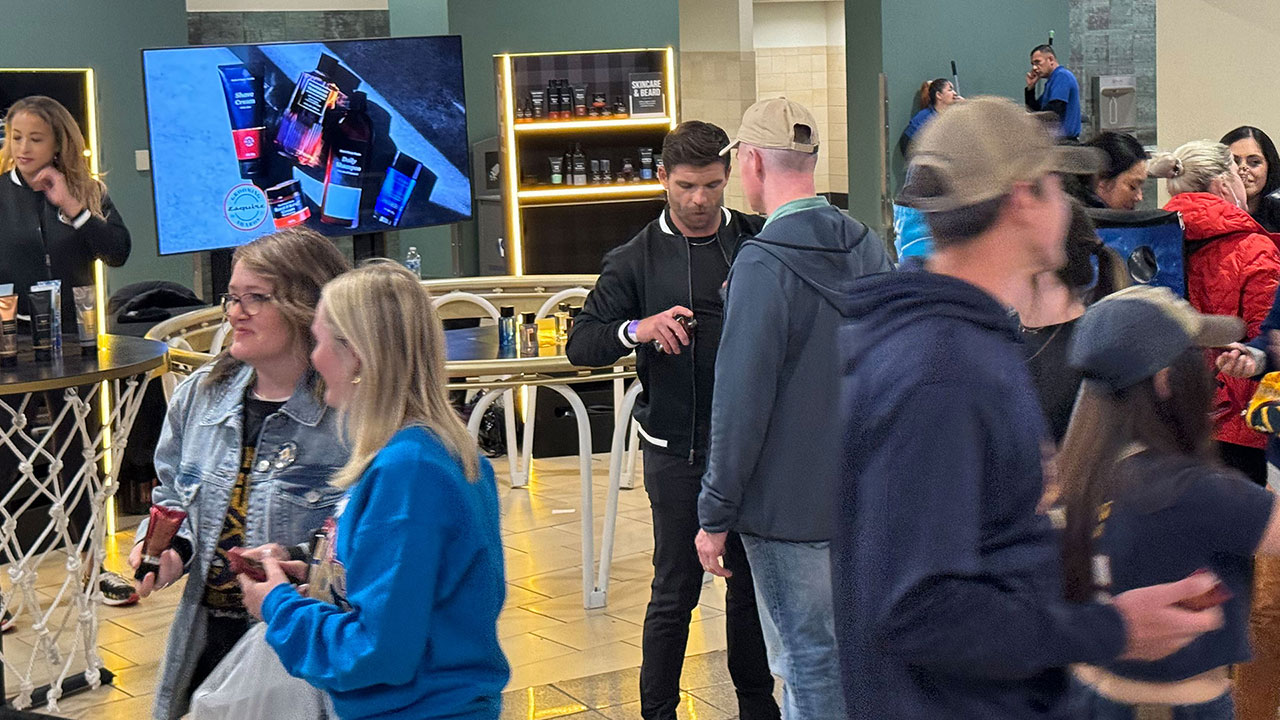
"Non-endemic" brands are everything else—companies whose products don't have an inherent connection to the sporting event they're sponsoring. Think technology companies at golf tournaments. Chocolate brands at baseball stadiums. Insurance providers at college basketball events.
For years, conventional wisdom held that endemic sponsors had the advantage. They belonged there. Their presence made sense. Non-endemic brands were seen as interlopers—present but not quite fitting in.
That conventional wisdom is wrong.
The Non-Endemic Advantage
Here's what we've learned from executing non-endemic sponsorships: when done right, they often outperform endemic ones. Not despite their unexpected nature, but because of it.
1. Differentiation by Default
When five beer brands are competing for attention at a football game, they're fighting for the same share of mind. When a chocolate brand shows up at that same game with a compelling activation, there's no competition. They own the category entirely.
Ghirardelli activating at sports venues doesn't compete with other chocolate brands for attention—because there are no other chocolate brands there. They're not fighting for differentiation within a cluttered space. They are the differentiation.
2. Surprise Creates Memorability
Consumers expect beer sponsors at sporting events. They don't expect premium chocolate. That surprise factor—"wait, why is Ghirardelli here?"—creates engagement opportunities that expected brands simply don't have.
The human brain is wired to pay attention to the unexpected. Non-endemic brands can leverage this cognitive bias by simply showing up where they're not anticipated.
3. Flexibility in Storytelling
Endemic brands are boxed into expected narratives. A sports drink sponsor has to talk about performance, hydration, and athletic achievement. The messaging lanes are well-worn.
Non-endemic brands can tell whatever story they want. They can focus on celebration, togetherness, reward, indulgence, or any other angle that resonates with the audience. The lack of category expectations becomes creative freedom.
Making Non-Endemic Work: The Strategic Framework
Non-endemic sponsorships succeed when they solve two challenges: relevance and authenticity. Miss either one, and you're just a brand that showed up where it doesn't belong.
Finding Your Relevance Hook
Every non-endemic sponsorship needs a clear answer to: "Why are you here?" The best answers aren't about the sport—they're about the audience and the occasion.
Consider these relevance angles:
- Occasion-based: "People celebrate with chocolate. This is a celebration."
- Audience-based: "Our customers love this team. So do we."
- Experience-based: "We make moments better. This is a moment."
- Geographic-based: "This is our hometown. We show up for our hometown."
The relevance doesn't have to be about the sport itself. It has to be about why your brand and this audience belong together in this moment.
Building Authentic Presence
Authenticity means more than just showing up. It means showing up in a way that respects the audience and adds value to their experience.
Some questions to ask:
- Are we enhancing the fan experience or interrupting it?
- Does our activation give value or just extract attention?
- Would fans miss us if we weren't here?
- Are we part of the memory they'll take home?
The worst non-endemic activations feel like ads that wandered into the wrong venue. The best ones feel like they've always belonged there—even though they haven't.
Case Example: Chocolate at the Ballpark
When Ghirardelli wanted to expand beyond their traditional retail and tourism touchpoints, sports venues offered an intriguing opportunity. The challenge: make a premium chocolate brand feel at home in a hot dogs and Cracker Jack environment.
The approach focused on elevated indulgence—creating premium experiences that enhanced special occasions rather than competing with everyday stadium fare. Custom sampling programs, photo-worthy activation moments, and exclusive products only available at the venue.
The result: consumers who associated Ghirardelli with premium experiences now associated those experiences with their favorite sports memories. The brand earned a place in moments that matter to fans—without trying to be something it wasn't.

Common Mistakes in Non-Endemic Sponsorship
Forcing sports imagery: If you're a chocolate brand, you don't need football graphics all over your activation. You're not a sports brand. Don't pretend to be one.
Over-explaining your presence: If you need paragraphs of copy to justify why you're there, you probably shouldn't be there. The connection should be intuitive, not require explanation.
Treating it like a media buy: Sponsorship isn't advertising. Counting impressions misses the point. The value is in the experience you create and the associations you build.
Being interruptive: Sports fans are there for the game. Your activation should enhance their experience, not compete with it. If fans have to choose between watching the game and engaging with your brand, you've already lost.
Ignoring the superfans: The most passionate fans are your best advocates—and your harshest critics. Respect their expertise and their passion. They'll know if you don't actually understand the sport.
Measuring Non-Endemic Success
Traditional sponsorship metrics—impressions, logo visibility, social mentions—matter even less for non-endemic brands. The metrics that matter are about association and experience:
- Brand association shift: Do consumers now connect your brand with the emotions of the sporting experience?
- Experience quality: Did consumers engage meaningfully with your activation?
- Purchase intent: Are consumers more likely to buy your product after the interaction?
- Memory formation: Will consumers remember your presence when they remember the event?
These are harder to measure than impressions. They're also more valuable. Non-endemic sponsorship is about building emotional equity, not counting eyeballs.
Is Non-Endemic Right for Your Brand?
Not every brand should pursue non-endemic sports sponsorship. It works best when:
- Your product relates to occasions, celebrations, or social experiences
- Your target audience overlaps significantly with sports fans
- You can create experiences that genuinely add value
- You're willing to invest in activation, not just rights fees
- You have patience to build association over time
If you're just looking to get your logo on a scoreboard, endemic or not, you're approaching sponsorship wrong. But if you want to create meaningful brand moments with a captive, emotionally engaged audience—non-endemic sponsorship might be exactly what you need.
Exploring Non-Endemic Opportunities?
We've helped brands from chocolate to insurance find their place in sports marketing. Let's explore what a non-endemic partnership could do for your brand.
Start the Conversation